“Will it stay put?” It is one of the most understandable questions to ask about a partial denture. You want to talk, smile and sit down to a meal without giving your teeth all your attention.
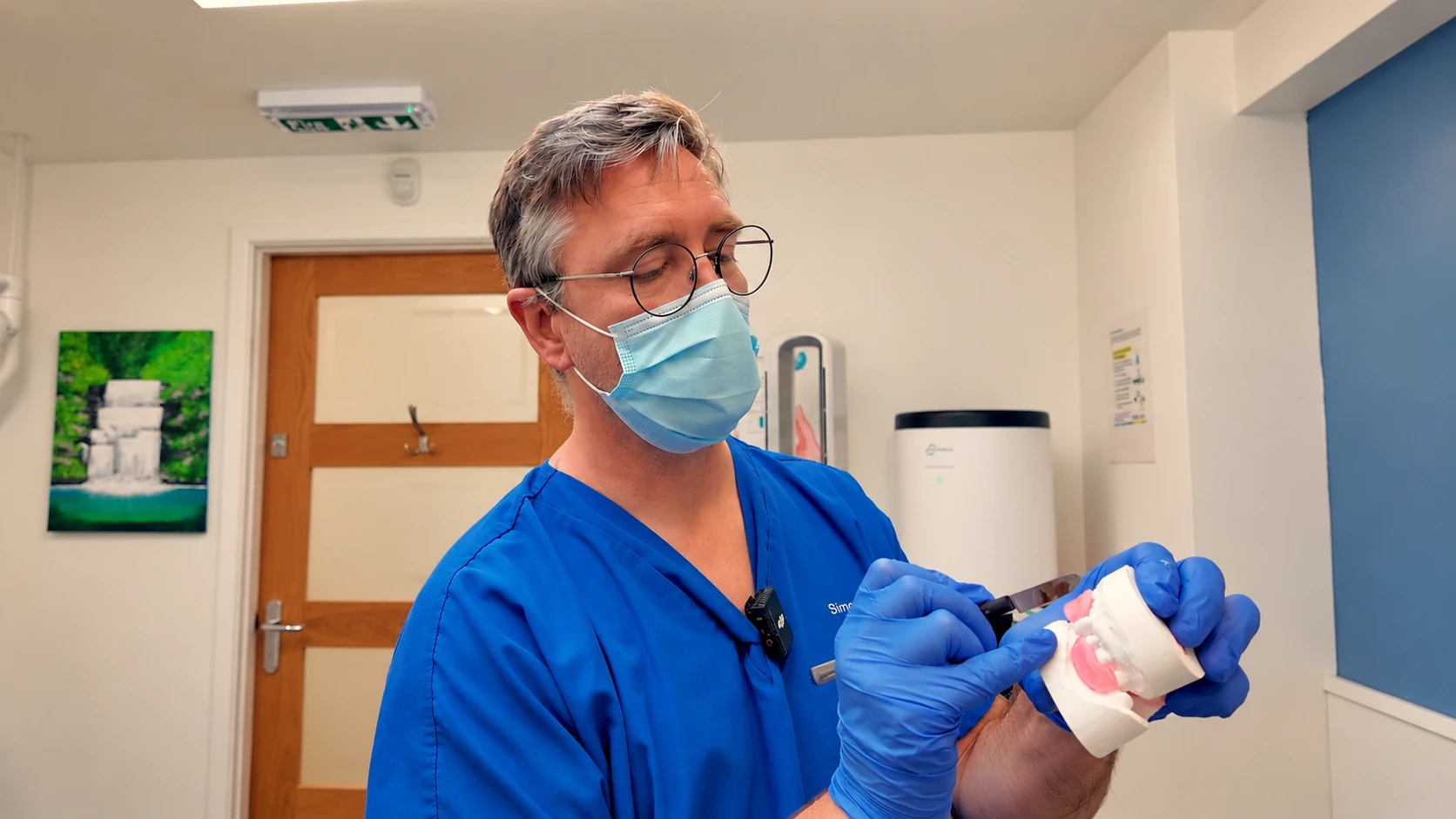
A partial denture is designed around the teeth you still have and the spaces that need filling. Its stability comes from the way those parts work together. In these photographs, Simon uses a model to make that relationship easier to see.
It starts with a design that suits your mouth
A removable partial denture replaces one or more missing teeth. It may have an acrylic base or a metal framework, and some designs use small clips, called clasps, around remaining teeth to help hold it in place.
The base also needs to sit appropriately against the tissues it covers. A clip is only one part of the design; a denture that rocks or rubs needs its overall fit checked, rather than simply being made tighter.

What do the clips actually do?
Clasps help the denture resist lifting out of position while still allowing you to remove it for cleaning. Their position depends on your remaining teeth and the design chosen for you.
Ask Simon to show you where to place your fingers when putting the denture in and taking it out. It should go into place with relative ease. Biting down to force it into position can bend or break clasps.
Will people see them when I smile?
Some clasps can show, depending on where they sit and how much of your teeth you show when smiling. That is a useful conversation to have while your denture is being planned.
You can explain what matters most to you about appearance and ask how the proposed design balances that with support and stability. The answer is individual; a photograph of someone else’s denture cannot tell you what yours will look like.
“It lifts when I chew on the left” or “it catches when I take it out” gives your dental team a much clearer starting point than “it doesn’t feel right”.
What if a partial denture starts moving?
A change in fit is a reason to arrange a review. Your mouth can change over time, and the denture itself may become worn or damaged. Your clinician can check what has changed and explain the options.
Do not bend the clips yourself or use household tools to make the denture grip more tightly. Ask for professional advice if it feels loose, painful or difficult to remove.
Keeping your remaining teeth healthy matters too
Continue regular dental visits and clean your remaining teeth twice a day with fluoride toothpaste. Your dentist can advise how to care for the teeth that sit beside your partial denture.
Because partial dentures involve remaining natural teeth, a dentist’s assessment and involvement are part of planning your care. Simon can explain how this fits into your appointments.
For help with a loose partial denture, call 01793 540128. You can also read what happens when a denture needs an adjustment.
The aim: feeling more at ease
The goal is a denture you understand and can manage comfortably in everyday life. What that involves depends on your mouth and your denture, so a conversation about your own experience is the best place to start.

More help with your dentures
- Meet Simon and learn about the clinic
- Explore denture pricing
- Get help with a damaged denture
- What is a denture reline?
- Eating well with dentures
Further reading
Patient guidance: Leeds Teaching Hospitals: removable partial dentures and American Dental Association: partial dentures. Clinical photographs supplied by the clinic.
This guide provides general information. Simon and your dental team can advise on your own circumstances.