A denture can look perfectly reasonable in your hand and still catch in one small place when you wear it. Perhaps an edge rubs, your bite feels uneven, or it shifts during a meal. Those details deserve attention.
A review gives you a chance to explain what is happening and have the denture checked. Sometimes a careful adjustment helps; sometimes a change in fit calls for a different approach. The first step is working out the cause.
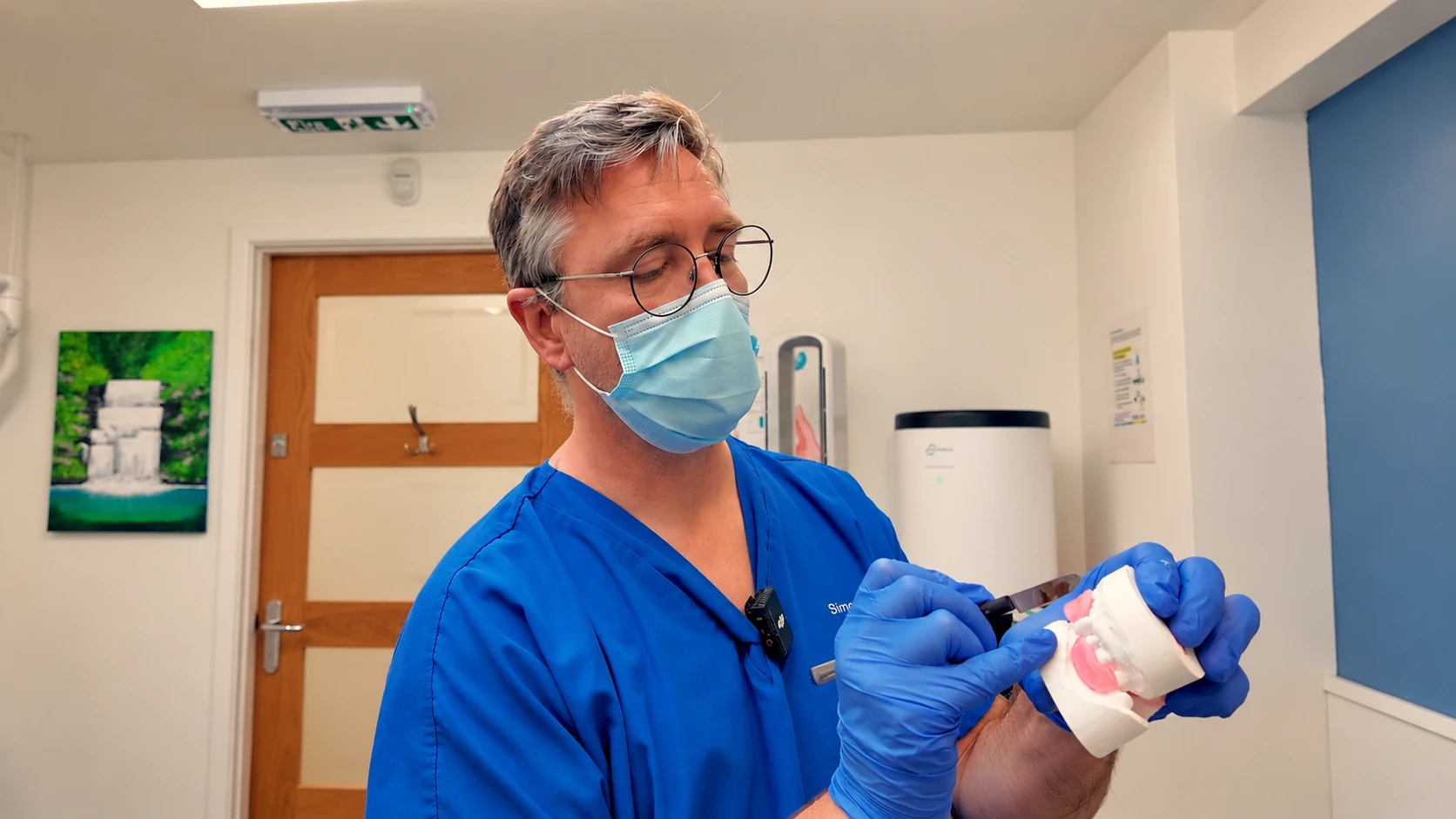
Why Simon uses a model to explain the fit
The close-up photograph at the top shows a dental model held up for demonstration. It gives a useful view of the shapes around the teeth and the space in which a denture has to work.
A model helps make the explanation clearer. At your appointment, Simon will also need to examine your own mouth and denture to understand what is happening.
What can an adjustment help with?
New dentures can produce local areas of rubbing or pressure. At a review, your clinician checks the sore area and the denture before deciding whether an adjustment is appropriate.
A small change to a particular area may improve comfort. That does not mean every loose or uncomfortable denture can be fixed with a quick trim. The fit, condition and way your teeth meet need to be considered together.
Tell us what happens, not just where it hurts
Think about the moments when you notice the problem. Is it when you first put the denture in? Does one area become sore after a meal? Does it move while you talk?
Show where it rubs or presses.
Explain when discomfort or movement starts.
Tell us about recent dental treatment or damage.
Bring the denture with you, even if you have stopped wearing it. If wearing it is very painful, contact the clinic for advice about what to do before your appointment rather than forcing yourself to keep it in.
An adjustment and a reline are different things
An adjustment changes a specific area of the denture. A reline adds material to its fitting surface to improve how it matches the tissues underneath. If the denture is worn, damaged or no longer suitable, replacement may need to be discussed instead.
There is no need to choose the treatment yourself before calling. Explain what has changed and let the assessment establish which option is suitable.
Leave the tools to your dental team
Filing an edge or bending a clip at home can change the fit in ways that are difficult to undo. Do not use household glue, heat or a DIY kit to alter a denture without professional advice.
If something has broken, keep the denture and all the pieces in a container with a lid. Call before travelling so the clinic can advise you and arrange a visit.
You should not have to put up with persistent pain
Some getting used to a new denture is expected. Ongoing soreness, repeated slipping or a denture you cannot wear comfortably should be checked. A sore or ulcer that has not healed within two weeks also needs assessment by a dental professional.
Call Cotswold Denture Clinic on 01793 540128 to discuss a review in Poulton. For more about how the denture is supported, read how partial dentures stay in place.
The aim: feeling more at ease
The goal is a denture you understand and can manage comfortably in everyday life. What that involves depends on your mouth and your denture, so a conversation about your own experience is the best place to start.

More help with your dentures
- Meet Simon and learn about the clinic
- Explore denture pricing
- Get help with a damaged denture
- What is a denture reline?
- Eating well with dentures
Further reading
Patient guidance: NHS: dentures, NSW Health: getting used to dentures and Dentures.org.uk: getting used to wearing dentures. Clinical photographs supplied by the clinic.
This guide provides general information. Simon and your dental team can advise on your own circumstances.